
What is random sampling in psychology? It’s the bedrock of truly representative research, and understanding it is key to unlocking findings that actually reflect the real world. Think of it as the fairest way to pick folks for a study, ensuring everyone gets an equal shot at being chosen. This isn’t just about making things fair; it’s about making sure the results we get from our research are actually meaningful and can be applied beyond the small group we studied.
At its heart, random sampling is all about chance. It’s the process where every single member of a larger group, or “population,” has an equal and independent chance of being selected to participate in a study. The primary goal? To create a sample that mirrors the characteristics of the entire population as closely as possible. This equal probability of selection is what gives random sampling its power, helping us avoid skewed results and draw conclusions that are more reliable and generalizable.
Defining Random Sampling in Psychological Research

Imagine a vast ocean of potential participants, each with unique thoughts, experiences, and behaviors. To truly understand a psychological phenomenon, researchers aim to cast a net that captures a representative slice of this ocean. This is where the magic of random sampling comes into play, ensuring that every drop in that ocean has an equal chance of being chosen, leading to findings that can genuinely speak to the broader human experience.At its core, random sampling in psychological research is a meticulously designed process for selecting individuals from a larger group, known as the target population, to participate in a study.
It’s a method steeped in the principles of chance, where every single member of the population has an unbiased opportunity to be included in the sample. This isn’t about picking favorites or relying on convenience; it’s about letting luck, guided by statistical principles, do the heavy lifting.
The Element of Chance and Equal Probability
The defining characteristic of random sampling is the unwavering commitment to chance. This means that the selection process is devoid of any systematic bias, ensuring that no particular subgroup or individual is unfairly favored or excluded. The paramount goal is to mirror the diversity and characteristics of the entire target population within the smaller group that will actually be studied.This principle of equal probability is the bedrock upon which the validity of random sampling rests.
If every member of the population has an equal shot at being selected, then the sample that is eventually formed is far more likely to reflect the true distribution of traits, opinions, and behaviors present in the population. This is crucial because the ultimate aim of most psychological research is to generalize findings beyond the specific group of participants to the wider population from which they were drawn.
Without this equal chance, the sample could be skewed, leading to conclusions that are misleading and not applicable to the people the research is intended to inform.
The Primary Goal of Random Sampling
The fundamental aspiration behind employing random sampling in psychological investigations is to achieve representativeness. Researchers are not just interested in the handful of individuals they recruit; they are interested in what those individuals can tell us about a much larger group. By using random sampling, the hope is to create a sample that is a miniature version of the target population, accurately reflecting its demographics, attitudes, and other relevant characteristics.This quest for representativeness is vital for several reasons:
- Generalizability of Findings: When a sample is truly representative, the results obtained from studying that sample can be confidently applied to the entire target population. This allows researchers to make broader claims and draw meaningful conclusions that extend beyond the immediate study group.
- Minimizing Bias: Random sampling actively works to prevent systematic errors that can creep into research. If participants are selected based on convenience or availability, the sample might overrepresent certain groups and underrepresent others, leading to biased results.
- Enhancing External Validity: External validity refers to the extent to which the findings of a study can be generalized to other situations and populations. A randomly selected sample significantly bolsters this crucial aspect of research quality.
Ensuring Equal Probability of Selection
The significance of equal probability of selection for every member of the target population cannot be overstated. It is the engine that drives the representativeness of the sample. Think of it like drawing names from a hat. If every name is in the hat, and each name has an equal chance of being pulled out, then the group of names drawn is likely to reflect the overall mix of names in the hat.
“Random sampling is the cornerstone of inferential statistics, allowing us to make educated guesses about a population based on a sample.”
This principle is often illustrated through various methods, such as:
- Simple Random Sampling: This is the most straightforward method. Imagine assigning a unique number to every individual in the target population and then using a random number generator to select participants.
- Systematic Sampling: This involves selecting participants at regular intervals from a list of the target population. For instance, every 10th person on a list might be chosen, provided the starting point is also randomly selected.
- Stratified Random Sampling: Here, the population is divided into subgroups (strata) based on shared characteristics (e.g., age, gender, socioeconomic status), and then random sampling is conducted within each stratum to ensure proportional representation.
- Cluster Sampling: In this method, the population is divided into clusters (e.g., geographical areas), and then a random selection of clusters is made, with all individuals within the chosen clusters participating in the study.
Each of these techniques, while varying in approach, fundamentally adheres to the principle of giving every individual an equal and independent chance of being included in the study sample. This commitment to fairness in selection is what imbues the resulting data with the power to speak to the larger human narrative.
Core Principles and Characteristics

Imagine a grand tapestry woven with the threads of human behavior. To truly understand its intricate patterns, we cannot simply pluck threads at random; we need a method that ensures every thread has an equal chance of being examined. This is the essence of random sampling in psychology – a meticulous approach to selecting participants that allows us to peer into the collective mind with confidence and clarity.
It’s about fairness, about giving every potential voice a seat at the table, and ultimately, about drawing conclusions that resonate beyond the specific group we’ve studied.At its heart, random sampling is built upon a foundation of pure chance and an unwavering commitment to impartiality. It’s a systematic dance with probability, where the selection of one individual has no bearing on the selection of another.
This seemingly simple principle unlocks the door to powerful insights, allowing researchers to generalize findings from a smaller group to a much larger population, much like understanding the characteristics of a forest by carefully examining a representative patch of trees.
The Pillars of Probability: Essential Principles
The integrity of random sampling rests on a few fundamental pillars, each contributing to its robust and reliable nature. These principles ensure that the process is not only fair but also scientifically sound, paving the way for meaningful discoveries about human psychology.
- Equal Probability of Selection: This is the bedrock. Every single member of the target population must have an equal and non-zero chance of being included in the sample. Think of it as drawing names from a hat – each name has the same opportunity to be pulled.
- Independence of Selection: The selection of one participant should not influence the selection of any other participant. This ensures that the sample is not skewed by pre-existing relationships or patterns within the population.
- Randomization Mechanism: A clearly defined and unbiased process must be used to make the selections. This could involve using random number generators, drawing numbers from a lottery, or employing other statistical methods that eliminate human judgment or preference.
Distinguishing Features: The Mark of Randomness, What is random sampling in psychology
What sets random sampling apart in the vast landscape of research methodologies? It’s a unique blend of characteristics that imbue it with a power unmatched by other techniques. These features are the tell-tale signs of a truly random selection process.Random sampling is characterized by:
- Unbiased Representation: Unlike convenience sampling, where researchers might select easily accessible individuals, random sampling aims to mirror the diversity of the larger population. This minimizes the risk of systematically over- or under-representing certain groups.
- Generalizability of Findings: The primary advantage is the ability to confidently generalize the results obtained from the sample to the entire population from which it was drawn. If the sample is truly random, it’s a miniature version of the whole.
- Statistical Power: The inherent randomness allows for the application of powerful statistical tests to analyze the data and draw inferences about the population with a calculable degree of certainty.
The Crucial Compass: The Sampling Frame
Before the lottery of random selection can even begin, researchers must know precisely who is in the game. This is where the concept of a “sampling frame” becomes indispensable. It’s the blueprint, the directory, the meticulously defined list from which the random sample will be drawn.A sampling frame is a comprehensive list or map of all the individuals or elements within the target population that are accessible to the researcher.
For example, if a study aims to understand the attitudes of all undergraduate students at a particular university, the sampling frame would be the official student enrollment list provided by the university registrar. The quality and accuracy of the sampling frame are paramount; an incomplete or outdated frame can introduce its own form of bias, undermining the very principles of random sampling.
Without a well-defined sampling frame, the “random” selection becomes a shot in the dark, lacking a clear target.
The Shield Against Skew: Absence of Systematic Bias
Perhaps the most critical characteristic that elevates random sampling is its inherent resistance to systematic bias. This is not just a desirable trait; it is the very essence of its scientific value.Systematic bias occurs when the selection process consistently favors certain outcomes over others, leading to a distorted representation of the population. Imagine a flawed scale that always weighs objects slightly heavier than they actually are; that’s systematic bias in action.
Random sampling acts as a shield against this by ensuring that no predictable pattern or preference influences the selection.
“The absence of systematic bias is the cornerstone of inferential statistics; without it, our conclusions are built on sand.”
In random sampling, every individual has an equal chance, meaning there’s no built-in mechanism that would systematically exclude or over-include any particular type of person. This lack of systematic preference allows researchers to trust that the differences observed in their sample are likely due to genuine variations within the population, rather than artifacts of the selection process itself. This is what gives random sampling its power to inform us about the broader human experience.
Random sampling in psychology ensures unbiased participant selection for generalizable findings. Understanding such methodologies is foundational for rigorous research, highlighting the diverse career paths and applications of psychological knowledge, as detailed in insights on what can a psychology degree get you. This rigorous approach, like random sampling, underpins credible psychological inquiry.
Types of Random Sampling Methods: What Is Random Sampling In Psychology

While the allure of pure randomness is captivating, in the intricate tapestry of psychological research, different threads of random sampling are woven to best capture the essence of our participants. Each method offers a unique approach to ensuring that every member of the population has a fair chance of being selected, but they achieve this fairness through distinct pathways. Let’s explore the diverse landscape of these methods, understanding their designs and the subtle nuances that make them suitable for various research scenarios.These methods are not mere academic exercises; they are the bedrock upon which the generalizability of our findings rests.
By employing them diligently, we move from observing a small group to making confident assertions about larger populations, a crucial leap in understanding the human psyche.
Simple Random Sampling
Imagine a lottery where every ticket has an equal chance of being drawn. Simple random sampling mirrors this ideal, offering the most straightforward path to unbiased selection. It’s the foundational method, ensuring that no systematic bias creeps into the selection process.The beauty of simple random sampling lies in its pure, unadulterated randomness. Each individual in the population has an independent and equal probability of being chosen for the sample.
This is the gold standard for many research endeavors, aiming to create a miniature replica of the population.Here’s how you can conduct simple random sampling:
- Define the Population: Clearly identify the entire group of individuals you wish to study. For instance, if you’re researching the study habits of undergraduate psychology students at a specific university, your population is all enrolled undergraduate psychology students at that institution.
- Create a Sampling Frame: Compile a complete and accurate list of every individual within your defined population. This could be a student roster, a membership directory, or any other comprehensive list.
- Assign Unique Identifiers: Assign a unique number to each individual on the sampling frame.
- Generate Random Numbers: Use a random number generator (software, a calculator function, or even a table of random numbers) to produce a set of numbers. The number of random numbers generated should be equal to the desired sample size.
- Select Participants: Match the generated random numbers to the corresponding individuals on your sampling frame. These individuals form your simple random sample. If a generated number corresponds to an individual already selected or is outside the range of assigned numbers, discard it and generate another.
For example, if a researcher wants to select 100 students from a university’s psychology department of 1000 students, they would create a list of all 1000 students, assign each a number from 1 to 1000, and then use a random number generator to pick 100 unique numbers between 1 and 1000. The students corresponding to these numbers would form the sample.
Systematic Random Sampling
Sometimes, the sheer size of a population or the practicalities of creating a perfect list can make simple random sampling a bit cumbersome. This is where systematic random sampling steps in, offering a more streamlined approach while still maintaining a high degree of randomness. It’s like selecting every nth item from a neatly arranged sequence, ensuring a regular interval of selection.This method involves selecting participants at regular intervals from the sampling frame, after an initial random start.
The key is the consistent interval, which, when combined with a random starting point, ensures that the sample is not biased by any underlying order in the list.The methodology of systematic random sampling is as follows:
- Define the Population and Create a Sampling Frame: Similar to simple random sampling, you begin by clearly defining your population and compiling a comprehensive list of all individuals.
- Determine the Sampling Interval (k): Calculate the sampling interval by dividing the total population size (N) by the desired sample size (n). The formula is:
k = N / n
- Select a Random Starting Point: Choose a random number between 1 and k (inclusive). This number is your starting point in the sampling frame.
- Select Participants: Starting from the randomly chosen number, select every kth individual from the sampling frame. For instance, if your starting point is 7 and your interval (k) is 10, you would select the 7th, 17th, 27th, 37th individual, and so on, until you reach your desired sample size.
A potential pitfall to be aware of is the possibility of periodicity in the sampling frame. If the list is arranged in a cyclical pattern that aligns with the sampling interval, the sample might become biased. For example, if a list of employees is ordered by shift, and you select every 10th employee, you might disproportionately select individuals from a specific shift.
Stratified Random Sampling
When a population is diverse and contains distinct subgroups (strata) that are important for your research, stratified random sampling becomes an invaluable tool. It’s like ensuring that every distinct flavor in a complex dish is represented proportionally in your tasting. This method guarantees that specific subgroups within the population are adequately represented in the sample, preventing underrepresentation of important segments.The core idea is to divide the population into homogeneous subgroups, or strata, based on relevant characteristics.
Then, a random sample is drawn from each stratum, ensuring proportional representation.Here’s how to organize and explain stratified random sampling:
- Identify Relevant Strata: Determine the characteristics that are important for your research and divide the population into mutually exclusive subgroups (strata) based on these characteristics. These could be age groups, gender, socioeconomic status, educational background, or any other relevant demographic or characteristic.
- Determine the Proportion of Each Stratum: Calculate the proportion of individuals in each stratum relative to the total population. For example, if 60% of your population is female and 40% is male, these proportions will guide your sampling.
- Determine the Sample Size for Each Stratum: Based on the proportions calculated in the previous step, determine how many participants to sample from each stratum to maintain proportional representation in your overall sample. If your total sample size is 100 and females constitute 60% of the population, you would aim to sample 60 females.
- Perform Simple Random Sampling Within Each Stratum: Once the sample size for each stratum is determined, use simple random sampling (or another appropriate random sampling method) to select participants from within each individual stratum.
To illustrate, imagine a researcher studying the impact of a new teaching method on students across different grade levels in a school district. The strata would be the grade levels (e.g., 3rd, 4th, 5th grade). If the total student population is 900, with 300 in each grade, and the researcher wants a sample of 90 students, they would randomly sample 30 students from each grade level.
Cluster Random Sampling
In situations where the population is geographically dispersed or naturally grouped into clusters, cluster random sampling offers a practical and efficient solution. It’s like selecting entire neighborhoods to survey rather than trying to reach every single house individually. This method involves dividing the population into clusters, randomly selecting a subset of these clusters, and then sampling all individuals within the selected clusters.The process of selecting clusters is central to this method:
- Define the Population and Identify Clusters: The population is divided into naturally occurring subgroups or clusters. These could be schools, hospitals, geographical regions, or any other identifiable grouping.
- Create a List of All Clusters: Compile a comprehensive list of all available clusters.
- Randomly Select Clusters: Use a random sampling method (like simple random sampling) to select a predetermined number of clusters from the list.
- Sample Individuals Within Selected Clusters: Once the clusters are selected, all individuals within those chosen clusters are included in the sample. Alternatively, a random sample of individuals can be drawn from within each selected cluster, leading to a multi-stage approach.
Consider a study aiming to understand the mental health needs of adolescents across an entire country. It would be impractical to survey every adolescent. Instead, the country could be divided into states or provinces (clusters). A random selection of states would be made, and then all adolescents within those selected states would be included in the sample.
Multi-Stage Random Sampling
When dealing with vast and complex populations, a single random sampling method might not be sufficient. Multi-stage random sampling combines elements of different random sampling techniques across multiple stages, offering a flexible and often more feasible approach. It’s like peeling an onion, revealing layers of selection to arrive at the core participants.This method involves breaking down the sampling process into a series of stages, with random sampling employed at each stage.
This allows for more efficient sampling of large and dispersed populations.Demonstrating the use of multi-stage random sampling:Imagine a national survey on the prevalence of anxiety disorders among adults in a large country.
- Stage 1: Geographical Clustering. The country is divided into geographical regions (e.g., states or provinces). A random sample of these regions is selected using simple or systematic random sampling.
- Stage 2: Urban/Rural Stratification within Selected Regions. Within each selected region, a further division might occur, stratifying areas into urban and rural. Then, a random sample of urban areas and rural areas within those regions is selected.
- Stage 3: Household Selection. From the selected urban and rural areas, a random sample of households is chosen. This could be done by using random number generators to select addresses from a comprehensive list of all households in those areas.
- Stage 4: Individual Selection within Households. Finally, within each selected household, one or more individuals are randomly selected to participate in the survey. This could involve asking for all adult residents and then randomly selecting one, or using a method like the “Kish grid” to ensure unbiased selection within the household.
This multi-stage approach allows researchers to manage the complexity and cost of sampling a vast population while still maintaining the principles of random selection at each step.
Advantages of Using Random Sampling in Psychology
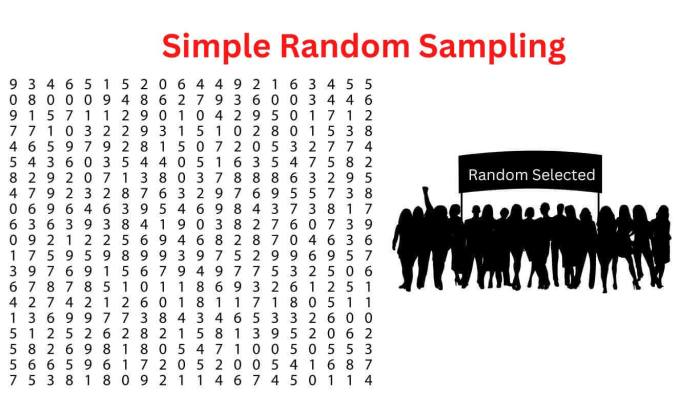
Imagine a detective meticulously gathering clues for a crucial case. Random sampling in psychology acts as that detective’s most trusted tool, ensuring that the evidence collected is truly representative of the entire scene. When researchers embark on understanding the intricate workings of the human mind, the way they select participants can profoundly influence the conclusions they draw. Random sampling, by its very nature, offers a powerful pathway to more robust and trustworthy psychological insights, allowing us to paint a clearer, more accurate picture of human behavior and cognition.The core beauty of random sampling lies in its ability to unlock doors to broader understanding.
Instead of relying on convenience or gut feeling, which can inadvertently skew results, random selection ensures that every potential participant has an equal, unbiased chance of being included in the study. This seemingly simple principle is the bedrock upon which generalizable and internally valid psychological research is built, transforming isolated findings into widely applicable knowledge.
Generalizability of Research Findings
The ultimate goal of much psychological research is to understand principles that apply not just to a small, specific group, but to the wider population from which that group was drawn. Random sampling is the golden ticket to achieving this broader applicability. When participants are chosen randomly, the sample is more likely to mirror the characteristics of the entire population of interest, whether that’s all university students, adults with a specific phobia, or even the general population of a country.
This mirroring effect means that the patterns, relationships, and effects observed in the sample are more likely to hold true for the population as a whole.Consider a study investigating the effectiveness of a new therapy for anxiety. If the participants were all recruited from a single, highly specialized clinic, the results might not apply to individuals seeking help through different avenues or those with milder forms of anxiety.
However, if participants were randomly selected from a broad database of individuals experiencing anxiety across various demographics and treatment-seeking behaviors, the findings would carry far greater weight when generalizing to the larger population of people with anxiety disorders.
“Random sampling is the bridge that connects the specific observations of a study to the universal truths we seek about human psychology.”
Reduction of Selection Bias
One of the most insidious threats to the integrity of psychological research is selection bias. This occurs when the method of choosing participants systematically favors certain individuals over others, leading to a sample that is not representative of the population. For instance, a study relying on volunteers might attract individuals who are more motivated, more educated, or more eager to please, thereby skewing the results.
Random sampling acts as a powerful antidote to this bias.By giving every individual in the target population an equal chance of selection, random sampling eliminates the researcher’s (or the participant’s) ability to influence who ends up in the study. This impartiality ensures that the sample is not systematically skewed by factors like personality traits, socioeconomic status, or prior experiences that might be related to the phenomenon being studied.
It’s like drawing names out of a hat; no one can pre-select the winning ticket.
Enhancement of Internal Validity
Internal validity refers to the degree to which a study can confidently establish a cause-and-effect relationship between variables. Random sampling plays a crucial role in bolstering internal validity, particularly when participants are also randomly assigned to different experimental conditions. While random assignment is the direct mechanism for ensuring equivalent groups at the start of an experiment, random sampling contributes by ensuring that the population from which these groups are drawn is as representative as possible.When the initial pool of participants is representative of the target population (thanks to random sampling), and these participants are then randomly assigned to treatment and control groups, the likelihood that pre-existing differences between groups are responsible for any observed effects is minimized.
This allows researchers to be more confident that any changes observed are indeed due to the experimental manipulation, rather than some inherent characteristic of the participants that was unevenly distributed across groups due to a non-random selection process.For example, if a researcher wants to study the impact of sleep deprivation on cognitive performance and randomly samples from a diverse student population, and then randomly assigns these students to a sleep-deprived group or a control group, they can be more certain that any differences in cognitive performance are due to the sleep manipulation, not because one group happened to have more naturally high-achieving students to begin with.
Disadvantages and Limitations of Random Sampling
While the allure of random sampling in psychological research is undeniable, promising an unbiased glimpse into the human psyche, its implementation is not without its shadowy corners and thorny obstacles. Like a perfect mirror, it reflects reality, but sometimes, the act of holding that mirror up to the world can be fraught with practical difficulties and inherent limitations that researchers must navigate with care.The ideal scenario of pure randomness, where every individual in the target population has an equal and independent chance of selection, often crumbles under the weight of real-world constraints.
These challenges can range from the sheer logistical nightmare of accessing entire populations to the ethical quandaries that can arise when a truly random selection might exclude vulnerable groups. Understanding these limitations is crucial for researchers to make informed decisions about their sampling strategies, ensuring that their findings are not only statistically sound but also practically meaningful and ethically responsible.
Challenges in Implementation
The path to achieving a truly random sample is often paved with practical hurdles that can make the theoretical ideal a distant dream. Imagine trying to randomly select every adult in a sprawling metropolis; the sheer scale and complexity can be overwhelming, demanding resources and infrastructure that are simply unavailable.Here are some of the key challenges researchers encounter:
- Defining the Target Population: Precisely identifying and enumerating every member of the population of interest can be an arduous task. For instance, defining the “global adult population” is an abstract concept, making it impossible to create a comprehensive sampling frame.
- Accessing and Contacting Participants: Even with a defined list, reaching individuals can be a significant challenge. People move, change contact information, or are simply difficult to locate, especially in large-scale or geographically dispersed populations.
- Participant Refusal and Non-response: Not everyone selected will agree to participate, leading to a non-random subset of the original sample. This can introduce bias if those who refuse differ systematically from those who agree.
- Cost and Time Intensiveness: Implementing rigorous random sampling methods, especially for large populations, can be incredibly expensive and time-consuming. This includes the costs associated with creating sampling frames, contacting individuals, and potentially offering incentives.
- Lack of Cooperation from Institutions: When studying specific groups within institutions (e.g., students in a particular school district, patients in a hospital), gaining access and cooperation for random selection can be hindered by administrative barriers or privacy concerns.
Situations Where Random Sampling is Impractical or Impossible
There are certain research contexts where the very nature of the phenomenon being studied or the accessibility of the population renders true random sampling an insurmountable challenge. These are the moments when researchers must acknowledge the boundaries of their methodology and consider alternative approaches.Consider these scenarios:
- Rare or Elusive Populations: Studying individuals with extremely rare conditions or those who intentionally avoid detection (e.g., certain subcultures, individuals engaging in illegal activities) makes it virtually impossible to create a comprehensive sampling frame or ensure random selection.
- Dynamic or Transient Populations: Populations that are constantly changing, such as homeless individuals or migrant workers, are difficult to define and enumerate at a single point in time for random sampling.
- Studying Historical Events or Past Behaviors: When researching events that have already occurred or behaviors from the distant past, researchers are limited to the available records or the memories of survivors, which are inherently non-random and prone to bias.
- Geographically Dispersed and Inaccessible Groups: While efforts can be made, achieving true random sampling of populations living in remote, conflict-ridden, or extremely isolated regions can be logistically prohibitive and pose significant safety risks.
Resource Intensiveness of Random Sampling
The pursuit of scientific rigor often comes with a price tag, and random sampling, particularly in its more sophisticated forms, can be a significant drain on financial and human resources. The meticulous planning, extensive data collection, and potential for repeated efforts to contact participants all contribute to a considerable investment.This resource intensiveness can manifest in several ways:
- Development of Sampling Frames: Creating accurate and up-to-date lists of the entire target population, a prerequisite for many random sampling techniques, can be a costly endeavor. This might involve purchasing existing databases, conducting extensive surveys, or employing dedicated personnel.
- Fieldwork and Data Collection: The actual process of contacting and surveying randomly selected individuals can require a large team of trained interviewers, travel expenses, and the logistical coordination of numerous data collection points.
- Incentives for Participation: To combat low response rates, researchers may need to offer financial or other incentives to participants, adding to the overall cost of the study.
- Data Management and Analysis: The larger sample sizes often associated with random sampling necessitate robust data management systems and advanced statistical analysis techniques, which also require specialized software and skilled personnel.
The financial implications can be so substantial that they may dictate the feasibility of a study or limit the scope of the research questions that can be addressed using purely random sampling.
Scenarios Where Random Sampling May Not Be the Most Appropriate
While random sampling is often the gold standard for generalizability, there are specific research goals and circumstances where other sampling techniques might offer a more efficient, practical, or even more informative approach. The decision to deviate from pure randomness is not a sign of methodological weakness but rather a strategic choice driven by the research question at hand.Here are situations where random sampling might not be the optimal choice:
- Exploratory Research: When researchers are in the early stages of exploring a new phenomenon and are seeking rich, in-depth insights rather than broad generalizations, purposive or snowball sampling might be more effective in identifying key informants or relevant experiences.
- Studying Specific Subgroups: If the research interest lies in understanding a particular subgroup within a larger population that is not well-represented in a simple random sample, stratified sampling (which is a type of random sampling but requires pre-stratification) or even quota sampling might be more efficient to ensure adequate representation.
- Qualitative Research: Qualitative research often prioritizes depth of understanding and rich descriptions over statistical generalizability. Techniques like purposive sampling, where participants are selected based on specific characteristics relevant to the research question, are common and effective.
- When Access to a Sampling Frame is Impossible: In situations where creating a complete sampling frame is genuinely impossible, researchers may have to resort to non-probability sampling methods out of necessity, acknowledging the trade-offs in generalizability.
- Case Study Research: In-depth investigations of individual cases or small groups, often a hallmark of case study research, typically employ purposive sampling to select cases that are particularly illustrative or informative for the research question.
In these instances, the pursuit of statistical representativeness might come at the expense of gaining crucial in-depth knowledge or accessing the most relevant participants for the specific research objective.
Practical Procedures for Implementing Random Sampling

Embarking on a psychological study without a robust sampling strategy is akin to setting sail without a compass; you might drift, but reaching your intended destination with precision becomes a matter of sheer luck. Random sampling, however, provides that crucial directional guidance, ensuring your findings are not mere whispers of a specific group but resonate as reliable insights into the broader population you aim to understand.
This section delves into the tangible steps, the nitty-gritty of putting these powerful techniques into practice, transforming theoretical principles into concrete research actions.Implementing random sampling methods requires meticulous planning and a clear understanding of the population under investigation. Each technique, from the straightforward to the more intricate, demands a structured approach to ensure every potential participant has an equal or appropriately weighted chance of being selected.
Let’s explore how these methods come to life in real-world psychological research scenarios.
Simple Random Sampling: A Student Stress Study Scenario
Imagine a university psychology department aiming to understand the current levels of stress among its undergraduate student population. To achieve this, they decide to employ simple random sampling, ensuring every undergraduate student has an equal opportunity to be included in their survey.The first critical step is to obtain a complete and accurate list of all currently enrolled undergraduate students. This list, often referred to as a sampling frame, is the bedrock of simple random sampling.
Once this comprehensive list is secured, say it contains 10,000 student names, the researchers decide they need a sample size of 500 students. The core of the procedure then involves using a random number generator. Each student on the list is assigned a unique identification number from 1 to 10,000. The researchers then input this range into a random number generator tool (available in statistical software, spreadsheets, or dedicated online platforms).
The generator will then produce 500 unique random numbers between 1 and 10,000. The students corresponding to these selected numbers form the final sample for the stress study. This method guarantees that no bias is introduced by the researchers in the selection process, making the sample a true reflection of the entire undergraduate student body for the purposes of this study.
Stratified Random Sampling: A Step-by-Step Guide
Stratified random sampling is a more nuanced approach, particularly useful when you need to ensure representation from specific subgroups within your population. Consider a study investigating the impact of a new teaching methodology on academic performance across different academic years (freshman, sophomore, junior, senior) within a large high school.Here’s a procedural guide for researchers:
- Define the Strata: Clearly identify the characteristics that will form the basis of your strata. In this case, the academic years (freshman, sophomore, junior, senior) are the distinct strata.
- Obtain a Sampling Frame for Each Stratum: Acquire separate, up-to-date lists of all students within each academic year. For instance, a list of all freshmen, a list of all sophomores, and so on.
- Determine the Proportion of Each Stratum in the Population: Calculate the percentage of students in each academic year relative to the total student population. For example, if freshmen constitute 30% of the student body, sophomores 25%, juniors 25%, and seniors 20%.
- Decide on the Sample Size for Each Stratum: There are two common approaches:
- Proportionate Stratified Sampling: The sample size for each stratum is proportional to its size in the population. If the total sample size is 400 students, then 30% (120 students) would be freshmen, 25% (100 students) sophomores, 25% (100 students) juniors, and 20% (80 students) seniors.
- Disproportionate Stratified Sampling: The sample size for each stratum is not proportional to its population size. This is often used when certain smaller strata are of particular interest or when variability within a stratum is expected to be high, requiring a larger sample from that group for adequate analysis. The decision here would be based on research objectives and anticipated variances.
- Perform Simple Random Sampling Within Each Stratum: Once the sample size for each stratum is determined, use a random number generator to select the required number of participants from each individual stratum’s list. For example, randomly select 120 freshmen from the freshman list, 100 sophomores from the sophomore list, and so forth.
- Combine the Samples: Merge the randomly selected participants from each stratum to form the final, representative sample for the study.
This methodical approach ensures that each academic year is adequately represented in the study, allowing for meaningful comparisons and more accurate conclusions about the teaching methodology’s impact across different student groups.
Cluster Random Sampling: A Community Psychology Context
In community psychology, researchers often deal with geographically dispersed populations, making it impractical to list every individual. Cluster random sampling offers an efficient solution by sampling groups or “clusters” of individuals. Imagine a study assessing mental health service accessibility in a large metropolitan area.The procedural steps for implementing cluster random sampling in this context would involve:
- Define the Population and Identify Clusters: The population is all residents within the metropolitan area. The clusters could be defined as distinct neighborhoods or census tracts within the city.
- Create a List of All Clusters: Obtain a comprehensive list of all eligible neighborhoods or census tracts that make up the metropolitan area. Let’s say there are 50 such defined areas.
- Determine the Number of Clusters to Sample: Decide how many clusters (neighborhoods) will be included in the study. This decision depends on resources, desired precision, and the expected homogeneity of mental health service access within clusters. Suppose the researchers decide to select 10 neighborhoods.
- Randomly Select Clusters: Employ a simple random sampling method to select the predetermined number of clusters from the list of all clusters. Using a random number generator, select 10 unique numbers corresponding to 10 of the 50 neighborhoods.
- Sample All Individuals Within Selected Clusters (One-Stage Cluster Sampling): In the simplest form, all individuals residing within the 10 randomly selected neighborhoods are included in the study. This is known as one-stage cluster sampling. For instance, all households within these 10 neighborhoods would be contacted, and all eligible residents would participate.
- Sample Individuals Within Selected Clusters (Two-Stage Cluster Sampling): Alternatively, a second stage of random sampling can be implemented within each selected cluster. For example, after selecting the 10 neighborhoods, researchers might randomly select a certain number of households within each of those neighborhoods, and then randomly select one or two individuals from each selected household to participate. This adds another layer of randomness and can make the sampling more manageable if the clusters are very large.
This method allows researchers to efficiently gather data from a widespread population by focusing their efforts on specific, randomly chosen geographic areas, thereby reducing logistical challenges and costs.
Essential Considerations Before Initiating Random Sampling
Before diving headfirst into the mechanics of random sampling, a thoughtful pause for crucial considerations is paramount. This preparatory phase can save considerable time, resources, and prevent potential methodological pitfalls down the line.A checklist of essential considerations includes:
- Clear Definition of the Target Population: Precisely define who constitutes your population of interest. Is it all adults in a country, or a specific demographic within a city? Vagueness here undermines the entire sampling process.
- Availability and Accuracy of the Sampling Frame: Is there a complete, up-to-date, and accurate list of all individuals or units within your target population? If not, how can one be constructed? The quality of the sampling frame directly impacts the representativeness of your sample.
- Feasibility and Resources: Consider the practical constraints. Do you have the budget, time, and personnel to implement the chosen sampling method? Complex methods might be theoretically ideal but practically impossible.
- Desired Level of Precision and Confidence: How precise do your results need to be? This will influence your sample size and the sampling method chosen. Higher precision often requires larger samples or more sophisticated designs.
- Potential for Non-Response Bias: Anticipate that some selected individuals may not participate. Develop strategies to minimize non-response and account for it in your analysis.
- Ethical Considerations: Ensure that the sampling process respects participant privacy, obtains informed consent, and avoids any form of coercion or discrimination.
- Homogeneity vs. Heterogeneity of the Population: If the population is highly homogeneous on the variables of interest, simple random sampling might suffice. If there’s significant heterogeneity, stratified or cluster sampling might be more appropriate to ensure adequate representation of subgroups.
Demonstrating the Use of Random Number Generators
Random number generators (RNGs) are the digital workhorses of random sampling, providing the impartial selection mechanism that underpins these techniques. Their use is straightforward, yet their impact on the integrity of the research is profound.Let’s illustrate with a simple scenario: a researcher wants to select 10 participants from a list of 100 individuals using simple random sampling.
“The essence of random sampling lies in the unbiased selection of participants, where each member of the population has a known, non-zero chance of being included in the sample.”
Here’s how an RNG would be employed:
- Assign Unique Identifiers: Each of the 100 individuals is assigned a unique number, from 001 to 100.
- Specify the Range: The researcher accesses an RNG tool (e.g., in Microsoft Excel, a statistical software package like R, or an online generator). They specify the desired range for the random numbers, which is 1 to 100 in this case.
- Determine the Number of Selections: The researcher indicates that they need 10 random numbers.
- Generate the Numbers: The RNG produces a list of 10 unique random numbers within the specified range. For example, the output might be: 23, 87, 05, 51, 99, 12, 38, 76, 64, 42.
- Select the Participants: The individuals corresponding to these numbers (person #23, person #87, person #05, etc.) are then selected for the study.
In stratified sampling, the RNG would be used separately within each stratum. For instance, if a stratum has 30 individuals and 5 need to be selected, the RNG would be set to generate 5 unique numbers between 1 and 30. For cluster sampling, the RNG would first select clusters from a list of clusters and then, if a second stage is involved, select individuals or households within those chosen clusters.
The reliability of these generators in producing truly random sequences is crucial for the validity of the sampling process.
Illustrative Examples in Psychological Research

To truly grasp the power and application of random sampling in psychology, let’s journey through some vivid scenarios. These examples will illuminate how researchers move from abstract principles to concrete data collection, ensuring their findings are as robust as they are insightful. Imagine the meticulous planning, the careful execution, and the eventual unveiling of knowledge, all built upon the foundation of a truly representative sample.Each method of random sampling offers a unique lens through which to view a research question.
The choice of method often hinges on the specific characteristics of the population and the research goals. By examining these diverse applications, we can appreciate the adaptability and essential nature of random sampling in the pursuit of psychological understanding.
Simple Random Sampling in a Cognitive Experiment
Consider a researcher aiming to investigate the impact of sleep deprivation on short-term memory recall. The target population is all undergraduate students at a large university. To ensure a truly unbiased selection, the researcher obtains a complete list of all enrolled undergraduate students. This list serves as the sampling frame.The researcher then assigns a unique number to each student on the list, from 1 to 15,000.
Using a random number generator, they select 200 unique numbers from this range. The students corresponding to these selected numbers are then invited to participate in the experiment. This process guarantees that every student has an equal and independent chance of being chosen, minimizing the risk of systematic bias creeping into the sample.
Stratified Random Sampling for Developmental Study Representation
A developmental psychologist is embarking on a longitudinal study to track the cognitive development of children from age 5 to 10. To ensure that the sample accurately reflects the diversity of age groups within this range, stratified random sampling becomes the method of choice. The target population is all children aged 5-10 within a specific city.The researcher first divides the population into distinct strata based on age: 5-year-olds, 6-year-olds, 7-year-olds, 8-year-olds, 9-year-olds, and 10-year-olds.
Let’s say there are approximately 1,000 children in each age group. The researcher then determines the proportion of each age group needed for the study, perhaps aiming for a total sample size of 600 children, with 100 children from each age stratum.Within each age stratum, a simple random sample is then drawn. For instance, from the list of all 5-year-olds, 100 children are randomly selected.
This process is repeated for each age group. This ensures that no single age group is over- or under-represented, allowing for robust comparisons across developmental stages.
Cluster Sampling for Mental Health Service Attitudes
Imagine a national mental health organization wants to gauge public attitudes towards available mental health services across the country. Surveying every individual would be logistically impossible. Instead, they employ cluster sampling. The target population is all adults residing in the nation.The country is first divided into geographical regions, which become the primary clusters. These regions might be states, provinces, or even specific counties.
A random sample of these geographical clusters is then selected. For instance, 20 out of 100 counties are randomly chosen.Once the clusters are selected, all individuals within those chosen clusters are invited to participate in the survey. Alternatively, a two-stage cluster sampling approach might be used where a random sample of households within the selected counties is then chosen. This method is cost-effective and practical for large, geographically dispersed populations, though it carries a higher risk of sampling error if the clusters are not homogeneous.
Random Sampling’s Crucial Role in Therapeutic Intervention Studies
A pharmaceutical company has developed a novel drug designed to alleviate symptoms of chronic anxiety. To rigorously test its effectiveness, they plan a clinical trial. The target population is adults diagnosed with chronic anxiety.To ensure that the results are generalizable and not due to pre-existing differences between groups, participants are randomly assigned to either the treatment group (receiving the new drug) or the control group (receiving a placebo).
This random assignment is a form of random sampling from the pool of eligible participants for each condition.This randomization is paramount because it helps to balance out any potential confounding variables – such as age, gender, severity of anxiety, or co-occurring conditions – between the two groups. If participants were not randomly assigned, researchers might unknowingly create groups that are inherently different, leading to biased results that falsely attribute changes to the drug when they might be due to other factors.
The integrity of the study hinges on this unbiased allocation, allowing researchers to confidently conclude whether the observed differences in symptom reduction are truly attributable to the new therapeutic intervention.
Comparison with Non-Random Sampling Methods

While random sampling stands as the gold standard for achieving representativeness in psychological research, it’s crucial to understand its place by contrasting it with the myriad of non-random sampling techniques. These alternatives, though often more convenient or practical, carry inherent trade-offs that significantly impact the generalizability of research findings. Navigating this landscape requires a clear understanding of the methodological distinctions and their implications for drawing conclusions about populations.The pursuit of knowledge in psychology often hinges on the ability to generalize findings from a study sample to a broader population.
Random sampling, with its inherent impartiality, offers the strongest pathway to this goal. However, the practicalities of research, including time, budget, and accessibility, sometimes lead researchers to employ non-random methods. Understanding the nuances of these different approaches is vital for both conducting robust research and critically evaluating existing studies.
Simple Random Sampling Versus Convenience Sampling
Imagine a researcher eager to understand the study habits of university students. Simple random sampling would be akin to placing every student’s name into a hat and drawing names blindly until the desired sample size is reached. Each student has an equal and independent chance of being selected, ensuring a sample that mirrors the student population in its diversity. In stark contrast, convenience sampling would involve the researcher approaching students readily available on campus, perhaps those in the library or a specific cafeteria.
While quick and easy, this method risks overrepresenting students who frequent these locations, potentially skewing the results and limiting their applicability to the entire student body. The outcome is a sample that, while accessible, may not truly reflect the varied experiences and habits of all students.
Methodological Distinctions Between Random Sampling and Purposive Sampling
Random sampling operates on the principle of chance, aiming for an unbiased representation of the entire population. Purposive sampling, however, is a deliberate and strategic choice. A researcher might use purposive sampling to study the experiences of individuals diagnosed with a rare psychological disorder. Here, the researcher actively selects participants based on specific criteria relevant to the research question, rather than relying on random selection.
This ensures that the sample comprises individuals who possess the unique characteristics under investigation. While this targeted approach is invaluable for in-depth study of specific groups, it inherently sacrifices the broad generalizability characteristic of random sampling, as the sample is not intended to represent a wider, unselected population.
Fundamental Differences in Participant Selection Between Random Sampling and Snowball Sampling
Random sampling casts a wide net, giving every member of the target population an equal opportunity to be included. Snowball sampling, on the other hand, begins with a few initial participants who then refer other potential participants who meet the study’s criteria. This technique is particularly useful when studying hard-to-reach or hidden populations, such as individuals involved in illicit activities or those with rare phobias.
The initial participants act as conduits, leading the researcher to others within their social network who share similar characteristics. The fundamental difference lies in the selection mechanism: random sampling relies on pure chance, while snowball sampling depends on social connections and referrals, creating a non-probabilistic chain of participant acquisition.
Comparative Table: Strengths and Weaknesses of Random Versus Non-Random Selection Techniques
To clearly delineate the trade-offs, consider the following comparison:
| Technique | Strengths | Weaknesses |
|---|---|---|
| Simple Random Sampling | High generalizability, minimizes bias, objective selection process. | Can be time-consuming and costly, may not be feasible for all populations, potential for unrepresentative samples by chance alone. |
| Systematic Sampling | Relatively easy to implement, can be more efficient than simple random sampling if a list is available. | Potential for bias if the list has a hidden pattern, requires a complete and accurate sampling frame. |
| Stratified Sampling | Ensures representation of key subgroups, can increase precision of estimates. | Requires prior knowledge of population strata, can be complex to implement. |
| Cluster Sampling | Cost-effective for geographically dispersed populations, simpler to implement than simple random sampling in some cases. | Higher potential for sampling error due to within-cluster homogeneity, requires careful definition of clusters. |
| Convenience Sampling | Quick, easy, and inexpensive to implement. | High risk of bias, very low generalizability, results may not be representative of the target population. |
| Purposive Sampling | Allows for in-depth study of specific groups, useful for qualitative research. | High risk of researcher bias, low generalizability, subjective selection criteria. |
| Snowball Sampling | Effective for reaching hard-to-access or hidden populations. | High risk of bias, results are not generalizable to the wider population, dependent on initial participants’ networks. |
Types of Research Questions Best Addressed by Random Sampling Versus Other Methods
Random sampling shines when the primary goal is to make broad, confident statements about a large population. For instance, if a psychologist wants to determine the prevalence of anxiety disorders in a country or assess the effectiveness of a widely adopted therapy across diverse demographics, random sampling is indispensable. It allows for statistical inference, where the characteristics of the sample are used to estimate the characteristics of the entire population with a known degree of certainty.However, when research delves into the intricate nuances of specific experiences, the motivations behind particular behaviors, or the lived realities of marginalized groups, non-random methods often become more appropriate.
For exploring the unique challenges faced by refugees in adapting to a new culture, purposive sampling would be more effective than trying to randomly select individuals from such a specific and potentially difficult-to-access population. Similarly, understanding the social dynamics within a particular subculture might necessitate snowball sampling to gain entry and gather insights. The choice of sampling method is thus intimately tied to the research’s overarching objectives and the nature of the population under investigation.
Concluding Remarks

So, while diving into the nitty-gritty of different random sampling methods might seem a bit technical, the core idea is beautifully simple: give everyone a fair chance. From simple random selection to more complex multi-stage approaches, the goal remains the same – to build a bridge from our study participants to the broader population. Understanding these methods, their pros, and their cons empowers us to design research that’s not only scientifically sound but also genuinely insightful, helping us unravel the complexities of the human mind with greater confidence.
Key Questions Answered
What’s the difference between a population and a sample?
The population is the entire group you’re interested in studying (e.g., all university students in a country), while the sample is a smaller, selected subgroup from that population that you actually collect data from.
Why can’t I just ask people who are easy to reach?
Using convenience sampling (asking people who are easy to reach) often leads to a biased sample that doesn’t accurately represent the larger population, making your findings less generalizable.
Does random sampling guarantee a perfect representation?
No, random sampling significantly increases the
-likelihood* of a representative sample, but there’s always a small chance of random variation. However, it’s the best method for minimizing systematic bias.
Can I use random sampling if my population is very small?
Yes, random sampling is still applicable and often highly recommended for smaller populations to ensure the most accurate representation possible.
What if I can’t get a list of everyone in my target population?
This is a common challenge. If a complete sampling frame isn’t available, researchers might need to consider alternative methods or adapt their definition of the target population.


