
Is social psychology the same as sociology? This ain’t no simple yes or no, fam. We’re about to break down these two big brains, see where they bump heads and where they go their separate ways. Get ready for a deep dive, no cap.
Social psychology dives into how individuals think, feel, and behave in social settings, zeroing in on the immediate environment and personal experiences. It’s all about the micro-level, dissecting how people react to each other, form attitudes, and get influenced by groups. Think about why you suddenly fancy that trainer brand ’cause everyone else is wearing it, or how easily you can be persuaded in a debate.
That’s the bread and butter of social psychology, using experiments and surveys to get the lowdown on individual minds.
Defining Social Psychology

Social psychology is a fascinating field that explores how our thoughts, feelings, and behaviors are influenced by the actual, imagined, or implied presence of others. It’s about understanding the intricate dance between the individual and their social world.At its core, social psychology focuses on the individual within a social context. The primary units of analysis are typically the individual person and small groups.
Social psychologists are interested in how individuals perceive, interpret, and react to their social environments, and how these interactions shape their internal states and outward actions.
Core Focus and Units of Analysis
The central aim of social psychology is to understand the psychological processes that occur in individuals as a result of their social interactions. This means looking at how people think about each other, how they influence each other, and how they relate to each other. The fundamental unit of analysis is the individual, but this individual is always examined within the context of their social relationships and the broader social environment.
This contrasts with sociology, which often focuses on larger societal structures and groups.
Phenomena Studied in Social Psychology
Social psychologists investigate a wide array of phenomena that highlight the power of social influence. These include:
- Attitudes and Persuasion: How attitudes are formed, maintained, and changed, and the various techniques used to persuade others.
- Social Perception: How we form impressions of others, attribute causes to their behavior (attribution theory), and the impact of stereotypes and prejudice.
- Social Influence: Conformity, obedience, compliance, and the ways in which individuals’ behaviors and beliefs are shaped by group pressure or authority figures.
- Group Dynamics: The behavior of individuals within groups, including group cohesion, decision-making, leadership, and intergroup relations.
- Interpersonal Attraction: The factors that lead to liking and loving others, such as proximity, similarity, and physical attractiveness.
- Prosocial Behavior: Actions intended to help others, such as altruism, and the factors that motivate them.
- Aggression: The causes and consequences of aggressive behavior, including both physical and verbal aggression.
Theoretical Perspectives in Social Psychology
Several theoretical perspectives guide social psychological research, offering different lenses through which to understand social behavior. These perspectives often overlap and complement each other.
Commonly employed theoretical perspectives include:
- Social Cognition: This perspective emphasizes how people process, store, and retrieve information about others and social situations. It focuses on mental processes such as attention, memory, and judgment in social contexts.
- Social Learning Theory: Developed by Albert Bandura, this theory posits that individuals learn social behavior through observation, imitation, and modeling, as well as through direct experience of rewards and punishments.
- Evolutionary Psychology: This perspective views social behaviors as adaptations that evolved over time to solve specific problems related to survival and reproduction, such as mate selection, altruism, and aggression.
- Sociocultural Perspective: This approach highlights the influence of culture and social norms on individual behavior and cognition. It examines how shared beliefs, values, and practices within a group or society shape individual actions.
- Social Exchange Theory: This theory views social relationships as a series of exchanges where individuals seek to maximize rewards and minimize costs. Relationships are maintained when the perceived benefits outweigh the perceived costs.
Methodologies in Social Psychology
Social psychologists employ a variety of research methods to gather data and test hypotheses. The choice of methodology often depends on the research question and the ethical considerations involved.
Typical methodologies include:
- Experiments: These are the hallmark of social psychology, allowing researchers to establish cause-and-effect relationships by manipulating one or more variables (independent variables) and observing their effect on another variable (dependent variable) while controlling extraneous factors. For example, an experiment might test the effect of group size on conformity levels.
- Surveys: Researchers use questionnaires or interviews to collect data from a large number of people. Surveys are useful for measuring attitudes, beliefs, and self-reported behaviors, but they can be subject to biases like social desirability.
- Correlational Studies: These studies examine the relationship between two or more variables as they naturally occur. They can identify associations but cannot establish causation. For instance, a correlational study might investigate the relationship between time spent on social media and levels of self-esteem.
- Field Research: This involves observing and collecting data in natural settings, such as public spaces or online communities. It offers ecological validity but may have less control over variables.
- Archival Research: This method involves analyzing existing data, such as historical records, media content, or public databases, to study social phenomena.
Defining Sociology

Sociology is a broad and fascinating field that examines human society and social relationships. While it shares some common ground with social psychology, its focus and scope are distinct. Understanding sociology is key to appreciating the larger forces that shape our individual lives and collective experiences.At its core, sociology is the scientific study of society, its structures, and the social interactions that occur within it.
So like, social psychology isn’t totally the same as sociology, they’re kinda different vibes. If you’re wondering if psychology is a tough major, legit, you should check out is psychology a difficult major , it’s a whole thing. But yeah, back to it, social psychology focuses more on individuals in groups, unlike sociology’s broader societal view.
Sociologists are interested in how societies are organized, how they change over time, and how individuals are influenced by the social groups and institutions they belong to. They look beyond individual psychology to understand the patterns and processes that operate at a group or societal level.
Core Focus and Primary Units of Analysis
Sociology’s primary focus is on the study of social life, social change, and the social causes and consequences of human behavior. Sociologists examine a wide range of social phenomena, from intimate family relationships to global social movements. The primary units of analysis in sociology can vary, but they generally encompass the following:
- Individuals: While sociology is not solely about individual psychology, it does examine how individuals are shaped by their social environments and how their actions contribute to social patterns.
- Groups: This includes small groups like families and peer circles, as well as larger, more formal groups such as organizations, communities, and social classes.
- Institutions: These are established and enduring patterns of social behavior organized around particular purposes or functions. Key social institutions include family, education, government, economy, and religion.
- Societies: At the broadest level, sociology studies entire societies, their structures, cultures, and the complex interplay of their various components.
- Social Structures: These are the patterned social arrangements that shape the lives of individuals and groups, such as social hierarchies, social networks, and cultural norms.
Phenomena Typically Studied in Sociology
The breadth of sociology means that its practitioners study an incredibly diverse array of phenomena. These studies often aim to uncover underlying social causes and consequences that might not be immediately apparent.Some common areas of sociological study include:
- Social Stratification: This involves the hierarchical arrangement of individuals and groups in a society based on factors like wealth, income, education, occupation, and social status. Sociologists analyze how these inequalities are created, maintained, and perpetuated across generations.
- Crime and Deviance: Sociologists investigate the social factors that contribute to criminal behavior and other forms of deviance, as well as how societies define and respond to such actions. This includes studying the criminal justice system and its role in social control.
- Family and Kinship: The changing nature of family structures, marriage patterns, and gender roles within families are central topics. Sociologists explore how families function as a social institution and how they are influenced by broader societal changes.
- Education: The role of educational systems in socializing individuals, transmitting knowledge and values, and perpetuating social inequalities is a significant area of study.
- Race and Ethnicity: Sociologists examine the social construction of race and ethnicity, the dynamics of racial and ethnic relations, discrimination, and the impact of these social categories on individuals’ lives and opportunities.
- Gender: The social construction of gender, gender roles, gender inequality, and the impact of gender on social interactions and opportunities are crucial areas of research.
- Urbanization and Community: The study of cities, urban life, the formation and dissolution of communities, and the social challenges and opportunities associated with urban environments are key sociological interests.
- Social Movements: Sociologists analyze the causes, dynamics, and consequences of collective action aimed at bringing about social or political change.
- Globalization: The interconnectedness of societies worldwide, the flow of ideas, goods, and people across borders, and its impact on local cultures and economies are increasingly important areas of study.
Theoretical Perspectives in Sociology
Sociologists employ various theoretical perspectives to understand and explain social phenomena. These perspectives offer different lenses through which to view society, highlighting different aspects and providing distinct interpretations.Common theoretical perspectives include:
- Functionalism (Structural Functionalism): This perspective views society as a complex system whose parts work together to promote solidarity and stability. It emphasizes the functions of various social institutions and how they contribute to the overall equilibrium of society. Key figures include Émile Durkheim and Talcott Parsons.
- Conflict Theory: In contrast to functionalism, conflict theory sees society as characterized by inequality and conflict that generate social change. It focuses on power struggles between different groups, such as social classes, races, or genders, over scarce resources. Key figures include Karl Marx and Max Weber.
- Symbolic Interactionism: This micro-level perspective focuses on the face-to-face interactions between individuals and the meanings they attach to symbols (language, gestures, objects). It emphasizes how individuals create and interpret social reality through their interactions. Key figures include George Herbert Mead and Herbert Blumer.
- Feminist Theory: A branch of conflict theory, feminist theory focuses on gender inequality and the social, political, and economic oppression of women. It seeks to understand and challenge patriarchal structures and promote gender equality.
- Postmodernism: This perspective questions grand narratives and universal truths, emphasizing the diversity of experiences, the fragmentation of society, and the role of language and discourse in shaping reality.
Methodologies Used by Sociologists
Sociologists use a variety of research methods to gather and analyze data, aiming for systematic and objective understanding of social phenomena. The choice of methodology often depends on the research question and the level of analysis.Typical methodologies include:
- Surveys: These involve collecting data from a sample of individuals through questionnaires or interviews. Surveys are useful for gathering information about attitudes, beliefs, behaviors, and demographic characteristics from a large number of people.
- Ethnography (Participant Observation): This qualitative method involves researchers immersing themselves in a particular social setting or group to observe and interact with people in their natural environment. It provides rich, in-depth insights into the lived experiences of individuals.
- Interviews: Whether structured, semi-structured, or unstructured, interviews allow researchers to gather detailed qualitative data by directly engaging with individuals and exploring their perspectives.
- Content Analysis: This method involves systematically analyzing the content of texts, media, or other cultural artifacts (e.g., books, films, social media posts) to identify patterns, themes, and meanings.
- Historical-Comparative Research: This approach examines historical records and compares different societies or cultures to understand social change, identify common patterns, and draw broader conclusions.
- Experiments: While less common in sociology than in psychology due to ethical and practical limitations, controlled experiments can be used to test hypotheses about cause-and-effect relationships in specific social situations.
- Secondary Data Analysis: Sociologists often utilize existing data collected by government agencies, research organizations, or other scholars to answer new research questions. This can include census data, crime statistics, or survey datasets.
Overlapping Areas and Shared Interests: Is Social Psychology The Same As Sociology

While social psychology and sociology are distinct disciplines, they share significant common ground, particularly when examining human behavior within social contexts. Both fields are deeply interested in how individuals and groups interact, influence each other, and form the fabric of society. This overlap allows for a richer, multi-faceted understanding of complex social phenomena.The core of their shared interest lies in understanding the “social” in social behavior.
Social psychologists tend to focus on the individual’s experience within a social situation, while sociologists often zoom out to examine larger societal structures and patterns. However, many research questions and theoretical frameworks bridge this gap, offering complementary insights.
Group Behavior Research Questions
Both social psychology and sociology investigate group behavior, but they approach it with different emphases. Social psychology often explores the immediate psychological processes that occur within groups, such as how individual attitudes are shaped by group norms or how group dynamics affect individual performance. Sociology, on the other hand, might examine how group behaviors contribute to broader social trends, social stratification, or the maintenance of social order.Here are examples of research questions they might ask about group behavior:
- Social Psychology Perspective: How does the presence of an audience affect an individual’s performance on a complex task? What are the psychological mechanisms behind conformity within small groups? How do intergroup biases form and persist at the individual level?
- Sociology Perspective: How do collective behaviors, such as protests or riots, emerge and spread within a society? What are the long-term impacts of social class on group formation and interaction? How do organizational structures influence group decision-making and power dynamics?
Common Concepts and Theories
Several foundational concepts and theories are central to both social psychology and sociology, highlighting their shared intellectual heritage and ongoing dialogue. These concepts provide frameworks for understanding the intricate ways individuals and societies are interconnected.Some of these shared concepts include:
- Social Norms: These are the unwritten rules of behavior that are considered acceptable in a group or society. Social psychology examines how individuals internalize and adhere to norms, while sociology looks at how norms are created, maintained, and how they function to regulate social life.
- Social Identity Theory: This theory, developed by Henri Tajfel and John Turner, posits that a person’s sense of self is derived from their membership in social groups. Social psychologists explore the psychological processes of categorization, identification, and comparison that lead to in-group favoritism and out-group discrimination. Sociologists might use this theory to explain intergroup conflict, social cohesion, and the formation of collective identities on a larger scale.
- Social Exchange Theory: This perspective views social relationships as involving an exchange of resources, where individuals are motivated to maximize rewards and minimize costs. Both disciplines use this to understand relationships, cooperation, and conflict, with sociology often applying it to larger-scale interactions like political alliances or economic transactions.
Social Influence Approaches
Social influence, the process by which individuals’ thoughts, feelings, and behaviors are affected by others, is a prime area of overlap. Both disciplines explore how individuals are persuaded, conform to group pressure, and obey authority, but they do so with different levels of analysis.
Social psychologists often focus on the immediate situational factors and cognitive processes that mediate social influence. They might study how the source of a message, the content of the message, and the characteristics of the audience impact persuasion. For instance, research on the elaboration likelihood model explores whether people are persuaded through central (logical) or peripheral (superficial) routes, depending on their motivation and ability to process information.
Sociologists, conversely, tend to examine social influence within broader societal structures and cultural contexts. They might investigate how media, institutions, or social movements exert influence on a population. For example, a sociologist might study how the spread of certain fashion trends or political ideologies is facilitated by social networks and cultural diffusion, looking at the macro-level forces at play rather than just individual cognitive processes.
Hypothetical Research Scenario: The Impact of Online Reviews on Consumer Behavior
Let’s imagine a research scenario investigating the impact of online reviews on consumer purchasing decisions for a new smartphone. This scenario can be explored using methods from both social psychology and sociology.
Social Psychological Perspective
A social psychologist might design an experiment to test how the valence (positive/negative) and number of online reviews affect an individual’s perceived product quality and their intention to purchase.
- Research Design: Participants would be randomly assigned to view different versions of a product page for the smartphone, each featuring a manipulated number and rating of online reviews (e.g., few positive reviews, many positive reviews, few negative reviews, many negative reviews).
- Methods: Questionnaires would be used to measure participants’ attitudes towards the smartphone, their perceived credibility of the reviews, and their likelihood of purchasing the device. Eye-tracking technology could also be used to see where participants focus their attention on the review section.
- Potential Findings: The social psychologist might find that a large number of positive reviews significantly increases purchase intention, even if the average rating is only moderately high. They might also find that negative reviews have a stronger impact than positive reviews, especially if they appear to be from credible sources or detail specific flaws. The study could reveal that individuals are more susceptible to persuasive influence when they lack prior knowledge about the product.
Sociological Perspective
A sociologist would approach this same phenomenon by examining the broader social and structural factors that shape the online review ecosystem and influence consumer behavior at a societal level.
- Research Design: A qualitative study could involve in-depth interviews with consumers from different demographic groups to understand their trust in online reviews, their strategies for evaluating them, and how their purchasing decisions are influenced by social consensus. A content analysis of online review platforms could also be conducted to identify patterns in review writing, the emergence of “super-reviewers,” and the influence of marketing strategies on review content.
- Methods: Ethnographic observation of online communities where smartphone reviews are discussed, analysis of platform algorithms that curate reviews, and surveys of consumer behavior across different socioeconomic strata would be employed.
- Potential Findings: The sociologist might discover that certain demographic groups (e.g., younger, tech-savvy individuals) place higher trust in online reviews than others. They might also find that the perceived legitimacy of review platforms is influenced by factors like platform ownership, the presence of paid endorsements, and the historical track record of the platform. The study could reveal how social capital within online communities influences the weight given to certain reviewers, and how collective perceptions of product quality emerge through aggregated review data, impacting market trends and brand reputation on a larger scale.
Distinguishing Factors and Unique Contributions

While social psychology and sociology share a common interest in human social behavior, they approach this study with different lenses and at different scales. Understanding these distinctions helps clarify their unique contributions to our knowledge of the social world.A key difference lies in the typical scale of investigation. Social psychology generally focuses on the individual within their social context, examining how immediate social situations influence thoughts, feelings, and behaviors.
Sociology, on the other hand, often looks at the larger picture, analyzing societal structures, institutions, and broad social patterns across groups and societies.
Scale of Investigation
The primary unit of analysis differs significantly between the two disciplines. Social psychology zooms in on the individual, exploring how they are affected by and affect others. Sociology zooms out, examining how larger social forces shape collective behavior and societal outcomes.
Social psychology’s typical scale of investigation:
- Focus on the individual’s immediate social environment.
- Analysis of interpersonal interactions and small group dynamics.
- Examination of how situational factors influence individual responses.
Sociology’s typical scale of investigation:
- Focus on macro-level social structures like class, race, and gender.
- Analysis of institutions such as family, education, and government.
- Study of broad social trends, social change, and societal problems.
Emphasis on Individual Cognition and Emotion
Social psychology’s distinctive contribution lies in its deep dive into the individual’s internal world – their thoughts, feelings, and motivations – and how these are shaped by social input. This cognitive and emotional focus is less central to traditional sociological analysis, which tends to prioritize observable social structures and behaviors.
“Social psychology is the scientific study of how people’s thoughts, feelings, and behaviors are influenced by the actual, imagined, or implied presence of others.”
This emphasis allows social psychologists to explore the nuances of perception, attribution, attitude formation, and emotional responses in social settings.
Topics Predominantly in Social Psychology
Certain research questions are almost exclusively the domain of social psychology due to their focus on individual psychological processes within a social context.
Examples of topics predominantly studied in social psychology:
- Attribution theory: How individuals explain the causes of their own and others’ behavior. For instance, a social psychologist might investigate whether someone attributes their success on an exam to their own effort or to an easy test.
- Attitudes and persuasion: The formation, change, and impact of attitudes, including how people are influenced by advertisements or political campaigns.
- Social cognition: How people process, store, and apply information about other people and social situations, such as the formation of stereotypes and heuristics.
- Interpersonal attraction: The psychological factors that lead people to like or love each other, including proximity, similarity, and physical attractiveness.
- Conformity and obedience: The study of how individuals yield to group pressure or authority, exemplified by classic experiments like Asch’s conformity studies or Milgram’s obedience experiments.
Topics Predominantly in Sociology
Conversely, sociology excels at analyzing societal-level phenomena that are too broad for the typical scope of social psychology. These topics often involve large-scale social patterns and systemic issues.
Examples of topics predominantly studied in sociology:
- Social stratification: The hierarchical arrangement of society into classes or strata, examining issues of social inequality, poverty, and social mobility. For example, a sociologist might study the long-term impact of economic recessions on different socioeconomic classes.
- Crime and deviance: The study of the social causes and consequences of criminal behavior and other forms of social deviance across different societies and cultures.
- Urbanization and community: The analysis of how cities develop and function, and the social dynamics within different types of communities.
- Social movements: The study of collective actions undertaken by groups of people to bring about or resist social change, such as the Civil Rights Movement or environmental activism.
- Demography: The statistical study of human populations, including their size, structure, distribution, and changes over time due to birth, death, and migration.
Methodological Differences in Practice

While both social psychology and sociology delve into human behavior in social contexts, their preferred methods for investigation often diverge, reflecting their different focal points. Understanding these methodological distinctions is key to appreciating how each discipline builds its knowledge base.Social psychology tends to lean towards quantitative and experimental approaches to isolate variables and establish cause-and-effect relationships, often at the individual or small-group level.
Sociology, on the other hand, frequently employs broader, more qualitative, and observational methods to understand societal structures, cultural patterns, and large-scale social processes.
Research Designs in Social Psychology
Social psychologists frequently utilize research designs that allow for controlled manipulation and measurement of variables related to individual thought, feeling, and behavior. This often involves creating specific situations to observe how people react.The most common research designs in social psychology include:
- Experiments: These are the cornerstone of social psychological research. Researchers manipulate an independent variable (the presumed cause) to observe its effect on a dependent variable (the outcome). This allows for strong inferences about causality. For example, an experiment might test how exposure to different types of advertising (independent variable) influences an individual’s purchasing intentions (dependent variable).
- Surveys: While surveys can be used in both fields, social psychologists often use them to gather data on attitudes, beliefs, and self-reported behaviors from a large number of individuals. These surveys are typically designed to measure psychological constructs and can employ Likert scales or other quantitative measures. For instance, a survey might assess individuals’ levels of prejudice and correlate it with their perceived social group memberships.
- Quasi-experiments: These designs resemble experiments but lack full random assignment of participants to conditions. They are used when true manipulation is not possible or ethical. For example, studying the impact of a natural disaster on people’s well-being would be a quasi-experiment, as the disaster cannot be manipulated.
Research Designs in Sociology, Is social psychology the same as sociology
Sociologists often employ methods that capture the complexity and richness of social life, focusing on patterns and structures within larger groups and societies. Their designs aim to understand the “big picture” and the lived experiences of people within those structures.Typical research designs favored in sociology include:
- Ethnography: This involves immersive, long-term observation of a particular social group or culture. The researcher lives within the group, participating in their daily lives to gain an in-depth understanding of their customs, beliefs, and social interactions from an insider’s perspective. An example would be a sociologist living in a specific neighborhood for a year to understand its community dynamics.
- Historical Analysis: Sociologists use historical records, documents, and artifacts to understand how social phenomena have evolved over time. This allows for the examination of long-term trends and the impact of historical events on contemporary society. Studying the history of labor movements to understand current worker rights issues is a form of historical analysis.
- Large-scale Statistical Studies: Similar to surveys, but often involving much larger datasets, these studies analyze existing statistical information (e.g., census data, government records) to identify social trends, correlations, and patterns across entire populations. For example, analyzing national crime statistics to identify demographic factors associated with higher crime rates.
- Case Studies: In-depth examinations of a specific event, person, group, or community. These studies provide rich, detailed qualitative data that can offer insights into complex social processes. A case study might explore the impact of gentrification on a single urban neighborhood.
Common Data Collection Techniques
The tools used to gather information are often shaped by the research design and the discipline’s primary focus. While there can be overlap, certain techniques are more characteristic of one field than the other.Here is a list of common data collection techniques, highlighting differences:
- Social Psychology:
- Laboratory Experiments: Controlled settings to measure precise behavioral or cognitive responses.
- Field Experiments: Experiments conducted in natural settings, offering more ecological validity than lab experiments.
- Questionnaires and Self-Report Scales: Standardized instruments to measure attitudes, beliefs, personality traits, and perceived behaviors.
- Physiological Measures: Recording biological responses like heart rate, skin conductance, or brain activity (e.g., fMRI) to gauge emotional or cognitive states.
- Observational Studies (often in controlled settings): Observing behavior in a structured manner, sometimes with confederates.
- Sociology:
- In-depth Interviews: Open-ended conversations to explore participants’ experiences, perspectives, and meanings.
- Participant Observation: The researcher actively participates in the activities of the group being studied.
- Focus Groups: Group discussions to explore a topic and observe group dynamics and shared opinions.
- Content Analysis: Systematically analyzing written, visual, or auditory materials (e.g., media, literature, speeches) to identify patterns and themes.
- Archival Research: Gathering data from existing historical documents, public records, and databases.
- Surveys (often with open-ended questions and broader social indicators): While quantitative, sociological surveys may include more open-ended questions and focus on societal-level indicators.
Interpretation of Findings
The way a social psychologist and a sociologist interpret the same social phenomenon can differ significantly due to their distinct theoretical lenses and methodological priorities.Consider the phenomenon of bystander apathy (where individuals are less likely to help a victim when others are present).
A social psychologist might interpret bystander apathy primarily through the lens of individual cognitive processes and social influence. They would likely focus on concepts like diffusion of responsibility (where individuals feel less personal responsibility when others are around), evaluation apprehension (fear of looking foolish), and social cues from other bystanders. Their research might involve laboratory experiments where participants are placed in simulated emergency situations to measure their helping behavior and related psychological states. The findings would be interpreted in terms of how situational factors and individual perceptions of the situation lead to reduced helping.
A sociologist, on the other hand, might interpret bystander apathy by examining the broader social structures and norms that influence helping behavior. They would consider factors like the social class of the victim and bystanders, the prevailing cultural norms regarding civic duty, the density and anonymity of the urban environment, and the historical context of community support systems. Their research might involve ethnographic studies of public spaces or analysis of large-scale crime data to identify patterns in helping behavior. The interpretation would emphasize how societal structures, group dynamics, and cultural expectations shape individual actions, rather than solely focusing on individual psychological mechanisms.
Illustrative Scenarios

Understanding the distinctions between social psychology and sociology becomes clearer when we examine how each discipline might approach the same social phenomenon. By looking at concrete examples, we can better appreciate their unique lenses and methodologies. This section provides scenarios illustrating how social psychologists and sociologists would study prejudice and conformity, and how they might apply their respective theoretical frameworks to issues like educational inequality.
Ultimate Conclusion
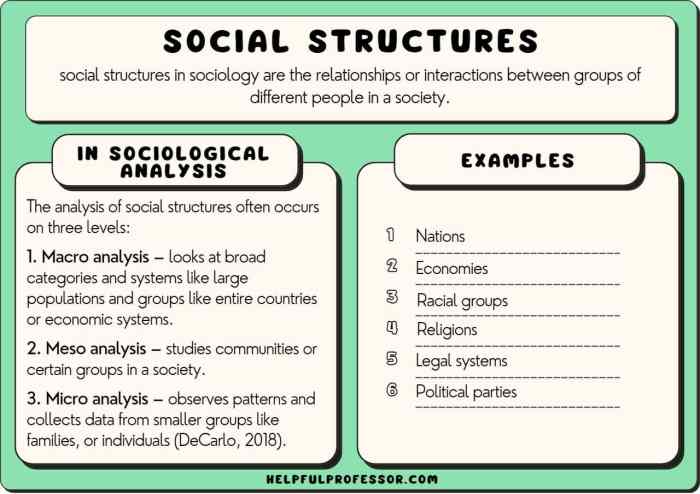
So, while both social psychology and sociology are looking at the same big picture of human interaction, they’re coming at it from different angles. Social psychology’s all about the individual within the group, the inner workings of the mind under social pressure. Sociology, on the other hand, is the wider lens, examining the structures, systems, and large-scale patterns that shape society.
Understanding this distinction is key to appreciating the unique insights each discipline brings to the table, helping us make sense of the world around us, from our personal choices to the grand movements of history.
Essential FAQs
What’s the main difference in what they study?
Basically, social psychology focuses on how individuals’ thoughts, feelings, and behaviours are influenced by the actual, imagined, or implied presence of others, digging into the micro-level. Sociology, however, looks at society as a whole, examining social structures, institutions, and large-scale social phenomena at the macro-level.
Do they ever use the same methods?
Yeah, they can. Both might use surveys to gather data, but social psychologists lean more towards controlled experiments to isolate variables affecting individual behaviour. Sociologists often prefer methods like ethnography, historical analysis, or large-scale statistical studies to understand broader societal trends.
Can you give an example of a topic each one would focus on?
Sure. A social psychologist might study why someone conforms to group pressure in a specific situation, looking at the individual’s decision-making process. A sociologist, however, might study the historical development of conformity as a social norm or how different social classes experience conformity differently.
So, is one more scientific than the other?
Nah, that’s not it. Both are scientific disciplines, but they employ different methodologies suited to their respective levels of analysis. Social psychology often uses experimental designs to establish cause-and-effect relationships at the individual level, while sociology uses a broader range of methods to understand complex societal patterns and relationships.
If I’m interested in how people form opinions about politics, which field should I look into?
You’d likely find insights from both. Social psychology would explore how individuals process political information, how group dynamics influence political attitudes, and the psychology behind political persuasion. Sociology would examine how social class, religion, or geographic location shape voting patterns, how political movements emerge, and the societal structures that influence political discourse.


